You can’t have an efficiently heated or cooled home without some knowledge of a heat pump’s power consumption. It is something every homeowner in New Zealand should be aware of if they are after comfort but not looking to see their electricity bill run away with them. Modern heat pumps are well suited to that sort of thing.
We have put together this guide to show you the ins and outs of how much power these units consume, what you can do to keep energy costs down and which is the best heat pump NZ has on the market. We will also go over the times you may want to call in the professionals for something like Refrigeration repairs Auckland from Airperfection.
What is Heat Pump Power Consumption?
When we talk about a heat pump’s power consumption, we are simply measuring the electricity it takes to run the unit. But in terms of efficiency, they are in a different league from your average heater. A conventional device will make its own heat, whereas a heat pump merely moves it from one place to another.
Key Insight:
A heat pump typically produces 3–4 units of heat for every 1 unit of electricity used.
Why Heat Pumps Are Trending in NZ
Heat pumps are becoming the go-to solution across Auckland and beyond—and for good reason:
- Energy-efficient performance
- Lower electricity bills
- Eco-friendly heating and cooling
- Year-round comfort
- Government encouragement for sustainable living
How Much Electricity Does a Heat Pump Use?
Here’s a simple breakdown to help you understand usage:
Average Heat Pump Consumption Table
| Heat Pump Size | Room Size | Power Consumption (kW) | Hourly Cost (NZD approx.) |
| Small (2.5 kW) | Bedroom | 0.6 – 0.8 kW | $0.15 – $0.20 |
| Medium (5 kW) | Living Room | 1.2 – 1.5 kW | $0.30 – $0.40 |
| Large (7 kW+) | Large Area | 1.8 – 2.5 kW | $0.45 – $0.65 |
💡 Note: Actual consumption depends on insulation, temperature settings, and usage habits.
Factors That Affect Heat Pump Power Consumption
1. Temperature Settings
Setting your heat pump too high or too low increases energy use.
👉 Ideal setting: 18–22°C
2. Room Insulation
Poor insulation forces the system to work harder.
3. Usage Duration
Running your heat pump all day naturally increases consumption.
4. Maintenance Condition
Dirty filters or faulty components reduce efficiency—this is where Refrigeration repairs Auckland services become important.
5. Heat Pump Type
Modern inverter heat pumps use less power compared to older models.
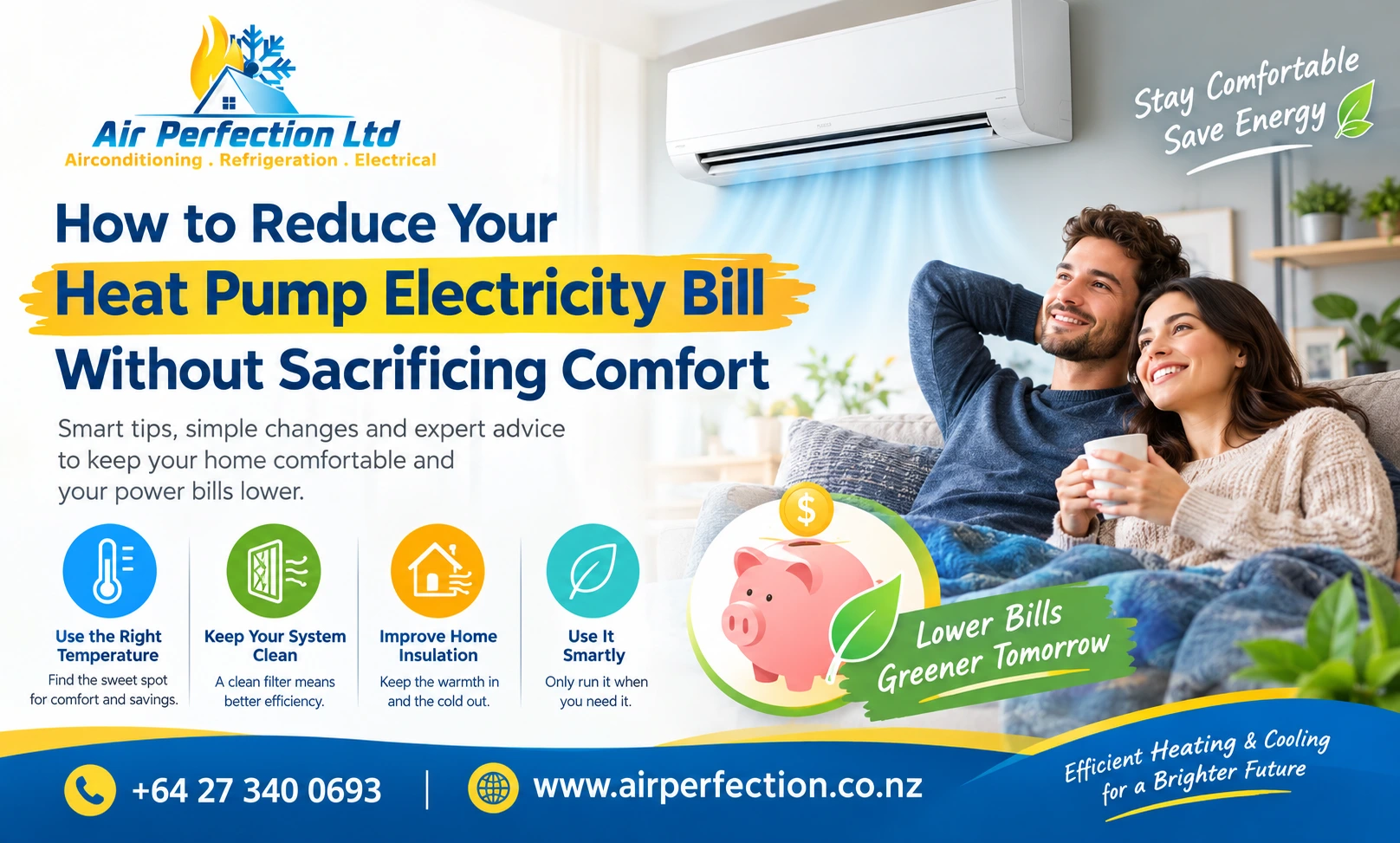
How to Lower Your Energy Costs with Your Heat Pump (Quick Guide)
Step 1: Get the Proper Size Unit
You don’t want to purchase a unit that is either too large or too small, as either of those types of units will decrease efficiency.
Step 2: Regularly Clean Filters
A dirty filter will increase your energy consumption by as much as 20%.
Step 3: Utilize Timers & Smart Control Features
You should only run your heat pump when it is needed.
Step 4: Seal Up Your Doors & Windows
Heat escapes from your home every time a door or window of yours is opened.
Step 5: Schedule Professional Maintenance by an Expert
It will be important for you to have your heat pump serviced by someone like Airperfection for you to get the best performance
Benefits of Low Heat Pump Power Consumption
- ✔ Lower electricity bills
- ✔ Longer system lifespan
- ✔ Better heating performance
- ✔ Reduced carbon footprint
- ✔ Quiet and smooth operation
Choosing the Best Heat Pump NZ
Finding the best heat pump NZ depends on your needs. Here’s what to consider:
✔ Energy Rating
Look for high star-rated models.
✔ Inverter Technology
Ensures efficient and stable operation.
✔ Brand Reputation
Choose reliable and trusted brands.
✔ Professional Installation
Poor installation = higher power consumption.
When Do You Need Refrigeration Repairs?
Even the best systems need maintenance. Signs you may need Refrigeration repairs Auckland include:
- Weak heating or cooling
- Strange noises
- Higher electricity bills
- Ice build-up on unit
- Water leakage
👉 Timely repairs prevent bigger problems and save money.
Why Choose Airperfection?
Airperfection is known for delivering reliable and efficient solutions across New Zealand.
What You Get:
- Expert heat pump installation
- Affordable servicing
- Fast repairs
- Energy-saving solutions
- Trusted local technicians
Final Thoughts
If you can accurately determine the amount of electricity that your heating and cooling system requires, you will be able to make more educated decisions on how to operate your heating and cooling systems. When you work hard to choose the right heating/cooling equipment, properly maintain it, and operate it appropriately you will get to enjoy your comfort without the stress of a high electricity bill.
If your heating and cooling system is due for an upgrade or needs some Refrigeration repair in Auckland, who better to perform these tasks than the professionals at Airperfection, allowing you to enjoy long-term reliable service while also saving some money?
FAQs About Heat Pump Power Consumption
1. How much electricity does a heat pump use per day?
A heat pump typically uses 4–10 kWh per day depending on usage, size, and temperature settings. Efficient usage can significantly reduce this.
-
Is a heat pump cheaper than electric heating?
Yes, heat pumps are up to 3–4 times more efficient than traditional electric heaters, making them much cheaper to run.
-
Does turning the heat pump on and off save electricity?
Not always. It’s better to maintain a stable temperature using inverter technology rather than constantly turning it on/off.
-
What temperature is most energy-efficient?
The ideal temperature is between 18°C and 22°C for both comfort and efficiency.
-
How often should I service my heat pump?
At least once a year. Regular servicing keeps power consumption low and improves performance.
-
Why is my heat pump using more electricity?
Common reasons include dirty filters, poor insulation, incorrect size, or the need for repairs.
-
Can an old heat pump increase power consumption?
Yes, older models are less efficient and consume more electricity compared to modern inverter systems.
-
Are heat pumps environmentally friendly?
Absolutely. They use less electricity and reduce carbon emissions compared to traditional heating systems.
-
How do I choose the right heat pump size?
Room size, insulation, and climate all matter. A professional assessment is recommended.
-
When should I call for refrigeration repairs?
If you notice reduced performance, unusual sounds, or increased energy bills, call experts immediately to avoid bigger issues.